When I was a kid, my dad would turn me loose on our ranch with a scope sighted 22 rim fire and a pocket of shells. “Be careful, watch for snakes, hunt slowly along Spots Branch and look for squirrels. I’ll meet you at 10am at Chili Crossing.” Those were my marching orders. Looking back, my guess was I was between 6 and 9 years old. Alone with a permit to roam and learn. Self-taught hunting skills were honed at that early age. Perhaps this is where my curiosity took root regarding all things in nature. Quiet and alone allows a developing mind to swell.
This was in late September and October when the first crisp cool fronts were passing through. Still mornings were best because I could see limbs shaking in the distance giving away the location of a feeding squirrel. Walking slowly, eyes catching any flicker of movement, ears tuned to the sound of acorns or pecans hitting the wooded floor. Aahhh me……typing this brings back memories!
When climatic conditions had been perfect and there was a bumper crop of mast, squirrels would be scattered. Even under those conditions, there were a couple of hot-spots that were favorites of mine. I learned of these areas by watching squirrels travel a great distance, jumping from limb to limb, traveling to a specific tree to get acorns. I witnessed squirrels go through post oak, pecan, hickory, live oak, black-jack oak and water oak, all laden with nuts, and forage in one specific tree. That tree had bark that looked a lot like water oak which was pale and shredding but the leaves were larger and lobed. I also noticed the acorns were about 50% bigger than the other acorns. I would sit under that tree, not moving a muscle but only my eyes and wait for squirrels to come to me.
Later, when I proudly showed off the heavy load of squirrels to my dad and told him about the “Magic Tree”, he told me it was a white oak. He knew exactly where it was. He told me about others too.
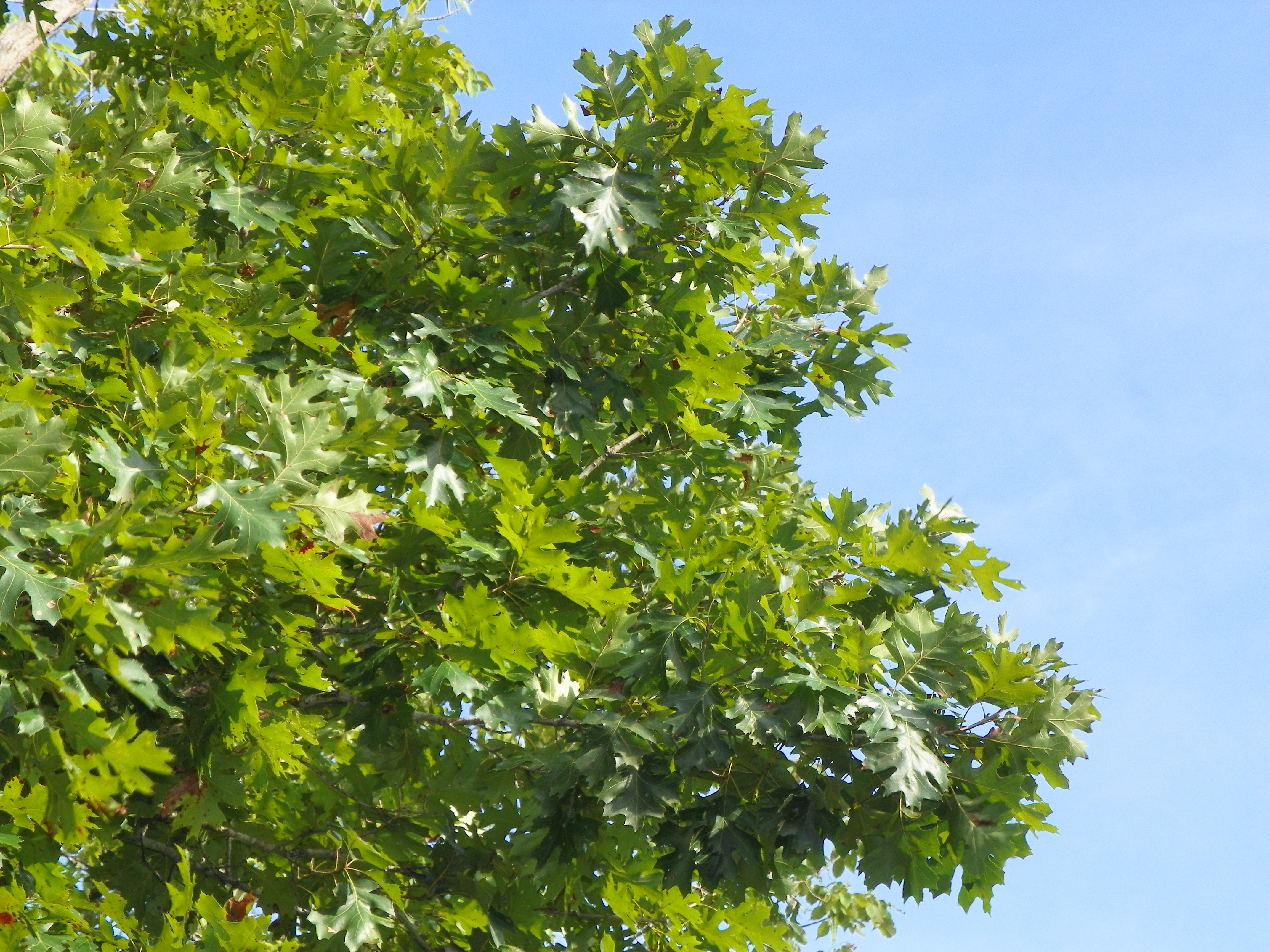
White Oak BarkWhite Oak Leaves
So, being an observant squirrel hunter gave me my first impression of a white oak. Later in November, I noticed deer traveling like a magnet to that same tree. There were not many white oaks on our ranch but I quickly learned where most were.
Let’s roll the clock to the present. When there are deer seasons coinciding with a heavy acorn crop, you would swear all of the deer have died of anthrax of some other disaster. Corn feeders and oat/wheat patches sit unused. Deer will ALWAYS, take native forage over corn and food plots when available. On those years you can expect very tough conditions with few deer observations. Well, if deer are only eating acorns, why not give them something rare that they relish over all other acorns. On our family’s ranch, I’ve started to plant white oak trees. I’ve initiated this project by planting 2-3 trees near every deer blind.
Seedlings are hard to find in Southeast TX. Very few nurseries have them. I’ve picked up acorns and started them in pots then transplanted the seedlings. I’ve also located seedlings on the ranch, dug them up to pot them for later plantings. So far, I have 23 trees going. My goal is to eventually have 100.
Seedling Found on RanchProtective CageHealthy Tree
I had a good friend, after seeing what I was doing, sarcastically ask me, “And how old are you?” I informed him this project is for my grandchildred.
The white oak (Quercus alba) tree is hailed as the classic king of the American oaks. Of all the oaks, white oak acorns have the least amount of tannins in their acorns, thus giving it the best or sweetest taste to wildlife. Although slow growing, it attains great size. One day in the future, my heirs will hopefully see a ranch with more white oak trees growing than any other property in the area and remember who was responsible for their existence. Our land lies about half-way between Houston and San Antonio, which is on the western edge of where white oaks naturally grow. It is a predominately eastern or southeastern tree. Keep that in mind.
It would probably be a good start to pull out a detailed map of the Big Bend area of Texas before we get too far along with this story. The setting is The Quitman Mountains, just south of the small community of Sierra Blanca in Hudspeth County. The Quitman’s are typical of many of the ranges there. The Baylor, Apache, Eagle, Chinati, Sierra Viejas and of course, the highest of the lot, the Davis Mountains all are separate from one another and isolated by miles of flat to slightly rolling grasslands and desert shrubs.
I believe it was in the 1950’s that a few ranchers from New Mexico introduced an animal from North Africa called the Barbary Sheep (Ammotragus lervia). Most people call this animal the Aoudad. They drifted east along Palo Duro Canyon and are plentiful there. They also drifted south into the Big Bend region of the state and are now numerous in all of the aforementioned mountain ranges.
They are robust—they have to be to thrive in this harsh environment. Their habits are very similar to the Desert Bighorns of Arizona, SE New Mexico, Nevada, Sonora Mexico and the Baja Peninsula. Both animals have terrific eyesight. Both can see isolated summer rains that may hit one mountain in the distance and overnight or over several nights, the animals will migrate to that site in order to take advantage of the fresh growth that follows. This is one of the reasons they spread into Texas.
A Desert Bighorn hunt can cost up to $25,000. The demand is high. But, with both animals inhibiting the same terrain and sharing the same habits, an Aoudad hunt can be tens of thousands of dollars less but the thrill is the same. Aoudads are often called a “Poor man’s Big Horn.” I was hunting desert mule deer in the Quitman Moutains and the ranch owner said if we bumped into an Aoudad that was a freebie.
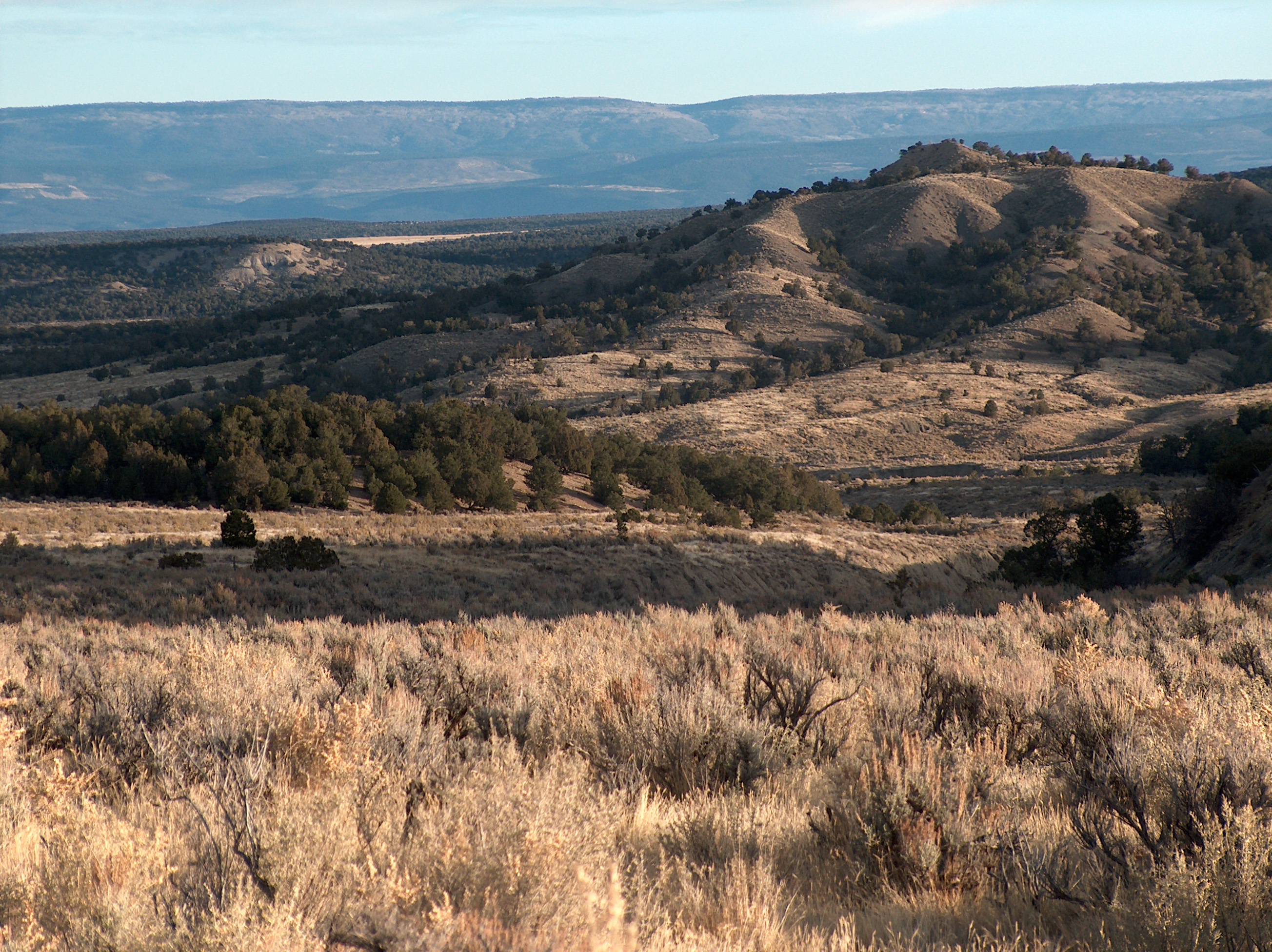
Now think of this. Look at your typical cell tower. The tallest you see is usually 500 feet high. Now envision 1,000 feet of almost straight up tumbled rock pile. Some rocks as big as your car, and some the size of a baseball, then add a variety of thorny desert shrubs with an occasional cedar tree and you get the picture of these mountains.
It was still dark when I started my hike up the southern mountain. I was carrying a Winchester Model 70 using 130 grain Speer Hotcore reloads. I had binoculars and a walking stick, and that’s it. The idea is to travel light. I shake my head when I see current TV hunting shows with the characters packing a bulging backpack. During the 1,000 foot ascent I would sweep the horizon and scan the side draws looking for those hard to see grey mule deer standing stationary in their grey/tan environment when I stopped to catch my breath.
Up and up I walked, switch back in a zigzag pattern to lessen the steepness of the ascent. Finally, I topped out and planted my rear end on a nicely shaped sandy spot with a small rock back rest. I started glassing in earnest now. After about 30 minutes, I spotted a lone Aoudad ram across the canyon on the north mountain. He was bedded near an isolated cedar tree, an easy landmark. As I watched, it peered across the landscape slowly chewing its cud. I assume he was thinking about past and future romances and battles. As a crow flies, the distance to the ram was probably three-quarters of a mile.
I wanted this animal. There was no option but to lose all of my hard-earned altitude, so down I went. At the road back at my truck, I ate an orange, downed some water and then bowed my back and started up again, but this time on the north mountain where the old ram was bedded.
I decided my best route was the direct approach as wind was not an issue. Because of the nearby cedar tree, I had him pegged for location but his bed site was just over a small rise and down a few yards of what was basically a small finger canyon. He was lying at the head of this small canyon.
When I got within 100 yards or so, I really put it in slow motion. Each step was deliberate. I put my foot down, slowly tested the traction by adding weight gradually, then I moved for the next step. The last 100 yards probably took 30 minutes. As I approached the little rise where it was lying, I was bent over so it could not see me. When I straightened up, I could see the curve of its horn and the small ears flicking unseen gnats away.
At this point, I was prepared for it to launch into a run at any moment and I was expecting to whittle it down while running. Slowly, deliberately, quietly I crept. Now standing straight and in plain sight behind it. For a fleeting moment I thought this may be how a mountain lion feels on the last leg of its stalk. Finally, the animal slowly turned its head and looked directly at me. I had my rifle up at this moment and settled the crosshairs. When the echo of the shot quit reverberating down the canyon, he lay dead in his bed with a neat entrance hole between the eyes. The bullet never did exit. It lodged somewhere in its heavy neck muscles and neck vertebra.
I sat a moment taking in all of the senses. The beauty of an old trophy ram, the heavy dark rubbed horns, the slick tan coat, the long hairs along its neck and front legs called “chaps” stirring slightly in the dry cold breeze. Below me I could see my truck looking like a toy. I could see the white winding road and the meandering white threads of sandy arroyos treading their way off the mountain range into the desert flats to the east. I was on top of that small section of the world.
Now the fun part begins. I cut off the cape and carried it, my rifle and the back strap down to the truck. Back up I went and this time made a purse with a rope and carried over one shoulder the hams and the other shoulder its shoulders. This was a heavy stumbling load of 4 quarters.
When I staggered to the truck and flopped down, I chug-a-lugged a cold beer in record time! My legs were aching and I thought that’s that. When I dug through my pile of equipment and looked in and out of my truck, I could not find my cherished binoculars. They had to be on the mountain so up I went and luckily found them near the solitary cedar tree that marked the bedded ram.
Thus the title of this tale – The Climb the Mountain Four Times Ram
I climbed the South Mountain early morning and spotted it.
I climbed the North Mountain and shot it.
I climbed the North Mountain to retrieve a load of meat.
I climbed the Mountain again to find my binoculars.
Again, look at a cell tower and double the height to roughly 1,000’ then climb that 4 times.
That ram is one of my most cherished trophies. I never measured it. It does not matter to me. I know it was an old grandpa and I know I took it the hard way, fair and square in its natural habitat. A spot and stalk hunt such as this draws out the drama over a longer period. During the time between spotting the game and actually killing it, you have subdued excitement. I made a perfect stalk and finished the deal with a perfect shot.
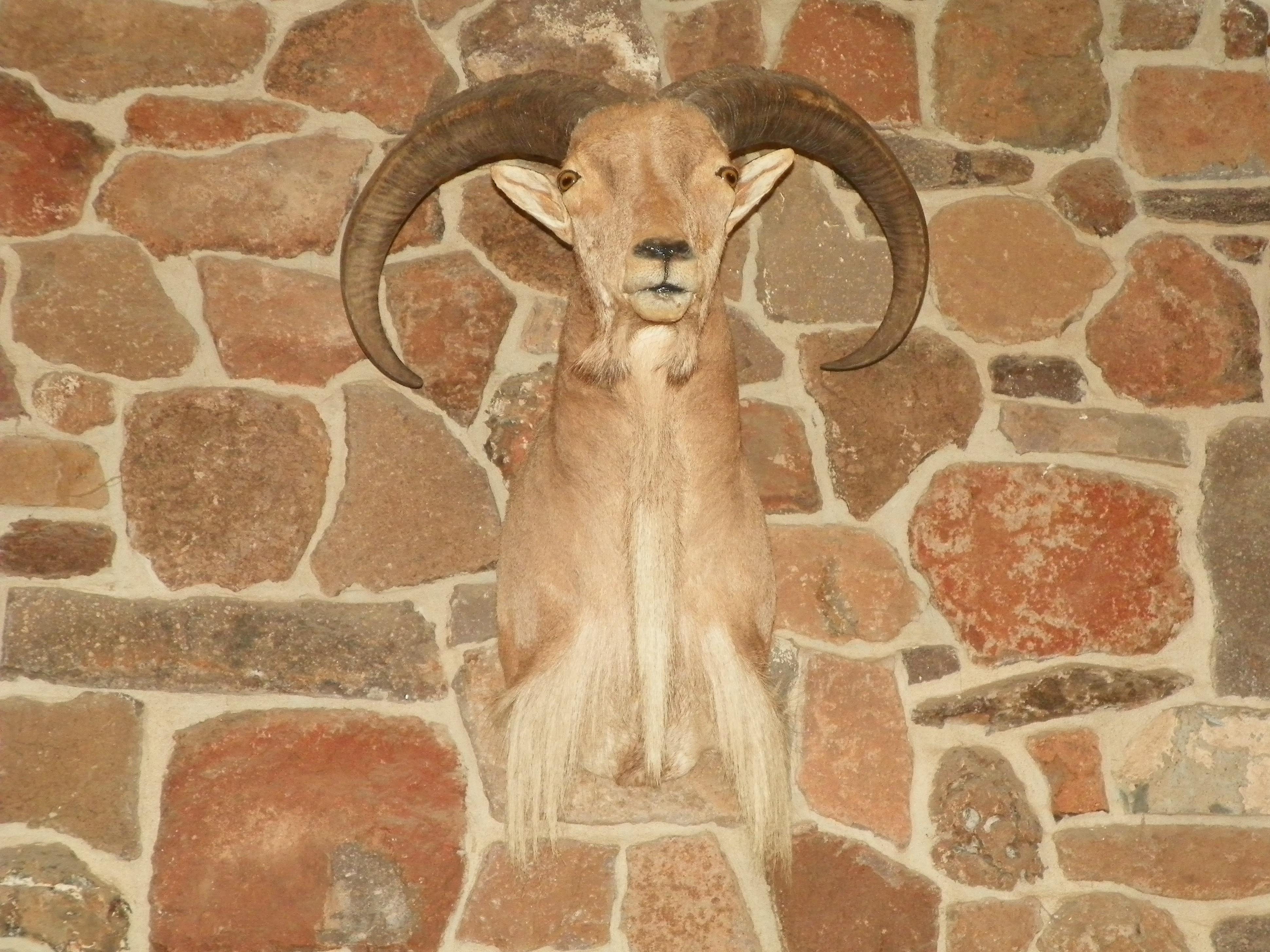
Its home on our fireplace
I have it mounted resting above our fireplace and my wife constantly nags me about taking it down but so far I have kept it there. As I get older, every time I gaze at it I reflect on the time I was young and could generate enough oxygen through my lungs, had knees that did not creak when I walked and had enough iron in my muscles to carry me four times up and down extremely rough mountains to cleanly take an interesting trophy. Every now and then I even imagine it as being a Desert Bighorn!
Desert Mule Deer is what we have in the Big Bend Region of Texas. The scientific name is Odocoileus hemionuscrooki. These deer are slightly smaller than their Rocky Mountain cousins, have a more washed out or paler skin coat that is light grey in their winter pelage. The white rump patch and facial hairs plus the dark scalp patch are not as pronounced as Rocky Mountain mule deer. They blend in perfectly with the drab desert landscape. Those suckers are hard to see!
The stars really lined up for me growing up. My dad started hunting on the Big Bend Ranch in 1966. That ranch is now a State Park. At the time, this property encompassed over 250,000 acres of extremely remote and rough desert habitat with bulking mountains, flat topped mesas and rim rock canyons. The headquarters housed a group of men that hunted out of the central part of the ranch and there were at least three outlying camps on the fringes of the property that other groups of hunters worked out of. My dad controlled Javalina Camp, which was on the southern portion of the ranch. I later learned this was in the heart of what some maps show as the Boffocillos Mountains. All that existed there was an adobe shack and a water well pump-jack. Two ranch hands lived there all year. One would watch the pump while the other rode the rusty water lines up to nearby saddles that held water storage tanks. From those tanks water lines fed down via gravity into canyons and small water troughs for livestock.
Horses were provided by the ranch and Mexican guides mysteriously appeared each opening day. My guess is we were in a straight line distance of perhaps 20 miles of the Rio Grande. A horse cost $5.00 per day and a guide was $3.00 per day. There was no long distance glassing looking for game. We simply saddled up at daylight and started riding. We had a canteen of water, a few cans of orange juice, sandwiches and cans of pork and beans in our saddle bags. At noon we would dismount, start a small fire to heat the beans and relax a bit. The Mexican guide would usually have a tortilla wrapped in foil that he would simply drop in the coals to heat.
We did not use saddle scabbards for our rifles. We either carried it across our backs by a sling or when our shoulders got raw from the rubbing, unslung the gun and let it sit across our laps behind the saddle-horn.
It is hard for anyone to imagine what a sure footed mountain horse, or especially a mule, would go. The first time I ever rode up to a giant canyon on horseback I almost swooned with vertigo. The depths were hazy with distance. Buzzards were sailing around beneath us! I thought we were stopping just for the view but our guide made us dismount where he double checked all saddles, tightened the girts and we then started down an extremely steep and faint trail INTO the chasm. It was so steep I was leaning backwards in the saddle and my head was perhaps two feet from the horse’s rump.
On the way down, I noticed an abandoned adobe house near the very bottom of the canyon. When we got to the sandy bottom, I insisted we travel down-stream to investigate. That was one lucky move on my part.
The house had the dank smell of dusty decay. Outside were relics of the past such as small chips of blue and dark green glass, rusty bits and pieces of metal. I found a couple of buckles that came off of a bridle or some sort. The corral was long gone and broken down. Whoever lived there had to approach from the Rio Grande since the way we approached was crazy. Amazingly, a big section of the roof was still intact. In an arid region such as this, it takes a long, long time for wood to rot. In one corner, still leaning against the wall was my pay day – a model 1873 Winchester 44-40. Rusty with faded wood on the stock and the hammer spring gone but was I proud. There was a sweeping “J” initial carved in the butt stock. I wish that gun could talk. Wouldn’t it be cool to hear its history? I cleaned it up the best I could and now have it hanging above the back door of my den at home.
That was my lucky trip. The year was 1969 and I was a junior in high school. The only way such a long trip could be made was due to the fact the opening day of mule deer season came on Thanksgiving weekend. We arranged to take a couple days off from school and it cost me some basketball playing time for the Weimar Wildcats but I had to hunt!
The day I killed my largest desert mule deer it was hot. I recall stripping down to my white undershirt and getting a bad sun burn. It was in the middle of the day and we were near the time when we needed to make a circle and start back towards camp. My guess was we were 12 miles SE of our camp. I was hunting with the late Tim Strunk and his brother Henry (Butch) Strunk. We were crossing a rolling grease wood flat where game is usually scarce and no one was particularly alert or expecting any action.
Right under our noses an old grandpa buck jumped from its bed. Everyone dismounted from skittish horses, dropped reins, unlimbered rifles and went into action. Tim was using a Winchester Model 100 semi-auto 308. He emptied his rifle, pulled an extra clip from his pocket and launched four more rounds at the bounding buck. Butch had a Winchester Model 70 in 308. He fired four rounds and never connected. I was shooting a Sako 270 and emptied my rifle. All misses. Sixteen rounds and not a hair hit! You know what was happening, don’t you? We were racing each other trying to beat the other guy to this big boy and not taking time to settle down and aim.
That buck was hauling it as fast as I have ever seen a mule deer run. He was bobbing up and down, sailing over little rises in the terrain and disappearing into small depressions, jumping cactus and leaning in and out while passing ocatillo, he would cut left and right looking like a punt return man for Notre Dame. We missed that deer in front, behind, above and over. Dust and rocks spurting up around the animal made it look like a war movie.
When the deer got out to about 350 yards it stopped on a small rise. He was rear to us but its head was turned to the side and I can still see its mouth agape and the deer panting. Tim and Butch were reloading. Instead of filling my rifle up like the Strunk brothers, I simply put one round in, got out of my kneeling position into a steady sitting position with my heals dug firmly into the gravel. I wrapped my arm into a tight sling and settled the sight expecting about a 10” drop. I was using hand-loaded 130 grain Hornady Spire Points at about 3,050 fps muzzle velocity. I was sighted in for 200 yards and knew my drop at 300 yards was around 7”. My guess of slightly over 300 yards was pretty close. After squeezing off the single shot and after the time interval of the bullet traveling that distance, I saw the buck collapse and then heard the delayed “thunk” of the bullet striking. I hit the animal just above the root of its tail and the bullet traveled forward into the lungs.
That was the largest desert mule deer I ever collected. He was old, broad backed and deep chested. He only had nine total points and he was not wide but the rack was tall with warty bases. I did not mount the animal and wish I did. Several years later we had a big party at our camp house near Columbus and one of the “guests”apparently stole several of the best mule deer antlers we had hanging under a nearby shed. His rack was one of the ones missing. Even without having his antlers I will never forget him.
It was my first hunt with my brother-in-law, Gary Pick.He and his long time Houston Firefighter buddies graciously included me for that year’s trip.They have been hunting in Southwest Colorado off and on for 20+ years—public land north of Cortez was the destination.
I have hunted Rocky Mountain mule deer twice near Raton, New Mexico, once near Craig Colorado, twice near Rifle Colorado and once near Molina Colorado. This was my first hunt on public land, and even though this region has a limited draw that restricts hunting pressure, nonetheless, the area seemed crawling with blaze orange vests and caps.I thought it too crowded.Afterwards I realized at least half of these hunters were only carrying elk licenses so the pressure on mule deer wasn’t as bad as it seemed.
It was the second afternoon of our five day hunt, and Gary and I were driving in my truck on a gravel county road heading west into the area we wanted to check out.About a mile ahead was an oil drilling rig.Service trucks, regular pickup trucks, hunter’s ATV’s and jeeps were keeping dust in the air on this busy road.I was not expecting to see what appeared.
As we were turning right and slowly losing elevation down into a sage brush flat, I glanced to my left into a long sage and pinion studded pocket and what I saw dang near caused me to hit the roof of my cab.I quickly sped down the road out of sight of the herd of bucks I had glimpsed. There were about 6 or 7 in the group, all mature, but one was a true once in a life time caliber animal.This guy looked like a calendar buck!Enormous baseball bat thick bases, cheater points here and there, it had an honest spread of 36 inches.
Colorado law says you cannot discharge a firearm from a vehicle or near a vehicle or across public roads.Gary already had a buck tag punched from the opening morning, so I instructed him to sit tight while I put on a short stalk. I grabbed my Winchester 270 and Leitz binoculars and took off.There was a long, low ridge separating the group of bucks from where my truck was parked.My estimate was about 2 stories high, but perhaps 250-300 yards long.The hill was covered with sage, tall dormant tan gamma grass, scattered juniper and large dark brown boulders varying in size between basketballs to as large as vehicles.
After scrambling to near the ridge top, I slowed down to catch my wind.Once my breathing returned to normal, I inched my way up.As soon as my head cleared the ridge, I spotted the gaggle of bucks but they spotted me the same instant.All scattered in different directions like a covey of quail exploding and all were running flat out.I am talking race horse running, not just tootling along, but digging it full speed.
Of course I had hoped to slowly settle into a comfortable position with a nice tree limb for a rest and potting the monster as it browsed in the pocket with his buddies.Now I faced a half dozen running bucks and all were gaining distance as I rushed to a fairly clear spot, planted my rear on the ground and settled into a good sitting position to start tracking the animals with my scope. I quickly found Mr. Macho.He was with a doe and running to my right. What complicated this mess was the glare in my scope because he was directly in line with the setting sun.
All of the above happened in a matter of seconds.I quickly calculated the animal at about 300 yards.He was still running and showing no sign of slowing down.My rifle was sighted for 200 yards and had a 7 inch drop at 300 yards.I held the horizontal crosswire even with its back to allow for drop and swung ahead to what appeared slightly more than a body length to allow for its running speed and fired one shot.The buck turned uphill with the doe and entered the thick timber that covered a large mountain.The buck did not flinch or stagger.There was no sound of a bullet striking flesh.Now all was quiet with the faint smell of burned cordite spicing the air.That moment was pure misery.
I walked back down to the truck and gave the details to Gary.We decided to go back and keep an eye out to see if by some miracle, the deer would reappear.We climbed back up, found one of the larger rocks to hide behind and settled in for the wait for dusk.At this time, I noticed a white pickup truck sitting on a ridge to the east but paid no more attention to it.The sun had set and two of the old bucks came out.Gary was jittery and urging me to shoot but all I could do is chuckle.They were good mature animals but were dwarf like compared to what I knew was on the mountain in front of us.
Largest buck harvested by another hunter on the trip – about half the size of the one that got away
At black dark, we gathered our gear and hiked back to my pickup.As we arrived, we met the two hunters in the white pickup.One asked, “Who shot?”I said I was guilty.He said, “You missed!”My response was something like don’t rub it in.You are going to make me cry.I asked why they did not go after him and the reason was they were holding elk tags, not deer.The driver said they saw a few bucks in the pocket so they stopped to glass when the monster appeared.According to them, he walked out deliberately and while taking exaggerated steps towards the other bucks began swinging his head right and left intimidating the others.They quickly gave him room.He was the bull for sure.Both of the elk hunters agreed he had 36+ in spread and numerous kicker points.Enormous body too.
Example of terrain
That night, the story was told in and around the tent camp and camp fire.The next morning after hunting halfheartedly in another area, Gary and I went back for a closer look.I showed him where I shot from and pointed out where the deer was running and also where it entered the heavy timber.We hiked across the pocket and started aimlessly walking about looking for tracks.Then Gary said something that caused my blood pressure to spike.“Here’s blood!”
When I say blood, I mean blood.Using GPS, from the spot of the first blood drop to where we lost the trail, it was 6/10 of a mile.This was not a faint trail either.You could walk fairly rapidly and steady following the trail.The mountain side was a thicket of cedar and basically a beach underneath.With the exception of scattered dead limbs, there were no weeds or grass under the shady canopy.Clean sand.Seeing blood was easy.The trail angled upward, not steep, but a steady climb.Splashes of blood were found here and there with occasional small pools about the size of a volleyball.Near the end, the trail suddenly turned down hill for about 25 yards where we found one large pool of blood about the size of a welcome mat to your house.I have never seen a deer of any kind at any place bleed this much.That was the last drop we found.
It is still a mystery and I think of it often.Where did it go?Did the elk hunters come back with their deer hunting buddies from their camp and recover it?I doubt it since I never saw another human track.I am confident I did not hit it in the body since it should have made the distinct sound of bullet striking flesh most hunters understand.I believe the bullet cut it somewhere and severed a big vein.It might have been its neck.It might have been a flesh wound to the hams or maybe low in the brisket.I am still miserable thinking about it.When mule deer run they do not glide like they are on roller skates but bound up and down.Think of a rubber ball bouncing down a hill and that about covers it.When the bullet passed it could have been at the top or bottom of one of its bounds.
I do not believe the deer died from my shot.The remainder of the hunt, two full days, I crisscrossed the mountain left and right above and below making ever widening circles looking for sign.I kept a sharp eye out for magpies and ravens since they would go to a carcass and lead me to it if something was dead on that mountain. I gave a fine tooth comb search of the area near the blood trail to as far as a mile away in all directions. I am certain, after losing that much blood, the buck found a water hole somewhere, rested up and hopefully healed up.I hate to think of a trophy of that caliber turning into coyote or black bear food.I will never know and it still haunts me.
PS
I am sure there will be a few readers who will condemn me for shooting at a running deer.This PS is an explanation/instruction on how it can be done successfully.
The night after I shot at the trophy mule deer, the other hunters in camp and I had a heated discussion about shooting at running deer.Every one there assured me with a modern fast stepping rifle there was absolutely no need to lead a moving animal.I am talking about weapons that shoot bullets in the 2,700 feet per second (fps) muzzle velocity range up to 3,200 fps.This includes most modern deer cartridges such as the 243, 257, 25-06, 260, 270, 7mm-08, 280, 7mm mag., 308 and 30-06.I was the sole person sitting around the camp fire saying it is necessary to lead with a rifle.The following math proves it……………
When I was in high school, the fastest man on Weimar’s track team was Allan Anders.He may have been the fastest man in Weimar’s history for all I know.Back then, the measured distances in track meets were in yards and not meters and I can distinctly recall on several occasions he ran 100 yards in 10.0 seconds.A couple of times he was in the high 9 second range but for this example, I will use the 10.0 seconds speed for 100 yards.
Now visualize a person flying along in the 100 yard dash.In your mind’s eye, can you visualize a deer running along the side of that person?My guess is even though a man is running as fast as he can, any deer could easily keep up with a casual lope.Keep that thought.
If the person was running 100 yards in 10 seconds, then the following equation would be accurate:
100 yards in 10 seconds.
10 yards in 1 second.
1 yard in 1/10th of a second.
So a deer running at a casual lope will move 1 yard in 1/10th of a second.
Now let us use a very popular deer cartridge, the 270 Winchester, which I happened to be using that day.I was using personally reloaded ammunition with 130 grain Speer Spitzer bullets with a muzzle velocity of 3,000 feet per second.Let us do some more calculating.
If the bullet travels 3,000 feet in one second, then it will travel 300 feet in 1/10th of a second.300 feet equals 100 yards.In real life, the second the projectile leaves the barrel it will immediately begin to loose velocity but to keep the math simple, I act as if the bullet keeps traveling the same speed as when it leaves the muzzle.
Now let us overlay the two examples of deer running speed to bullet speed.It takes a 270 bullet 1/10th of a second to reach 100 yards.If a deer is loping along at a right angle and is 100 yards away, then the lead has to be 1 yard in front of the animal to connect.Those are facts.Think of a loping deer and visualize putting a yard stick from just behind its shoulder to in front of its chest and that is where you must be aiming to hit the deer perfectly.
Prior to my first ever shot at a running big game animal, my dad’s best hunting buddy, Joseph Munhausen told me, “You can’t hit them unless you shoot and the more you shoot the better chance you have.”That thought stuck in my young brain.I was only 13 years old and was lucky enough to have my dad take me out to the Big Bend region of Texas.I was high in the rugged Bofocillos Mountains in what is now Big Bend State Park.We were on a lofty mesa and walked a short distance from the road to an enormous canyon called Lion Canyon.Sheer cliffs and hazy distances gave me a slight feel of vertigo.I was awestruck and distinctly recall vultures sailing along on the updrafts BELOW where I stood.After taking in the beautiful scenery, my dad started picking up good sized rocks and began lofting them here and there causing crashing mini rock slides down the talus slopes beneath the rim rock we were perched on.That unorthodox idea worked.Up bounded a mature desert mule deer and he was in high gear in a blink of an eye.
All I have ever seen was skinny yearling white tails in South East Texas.Here in front of me was a bounding broad backed slate grey mature mule deer buck bounding down the steep ridge.To my young eyes, it was as big as an elk!Remembering Mr. Munhausen’s words, I opened up.I shot five times as fast as anyone has ever worked a bolt action weapon.As soon as I saw deer anywhere in the scope I yanked the trigger.I doubt I ever hit within 6’ of the running buck.This caused me to pause and think.I realized you have to AIM to hit a running animal.It may be good to shoot fast but it has to be aimed shots.
I hunted that ranch for about 15 years.The method was to cover as much ground as possible on a horse or mule. No glassing.No spot and stalk.Just riding and jumping bucks that were bedded down and once they took off, then piling off the horses and opening up at the running deer.I quickly learned to lead or miss. It was fairly open country so you had the opportunity to shoot several times at each buck if necessary.Seeing dust fly from my bullets impacting behind running deer gave me obvious clues to aim further in front of those bounding bucks.
Later I took several white tails running both in West Texas and on our home ranch near Columbus.Here lately, I have had real good practice on running feral swine.On one occasion, witnessed by my good friend Wayne Zimmerhanzel,I shot 5 times with a semi-auto 308 in about 5 seconds.The first shot was at a standing pig and the last four shots were running.These were eating sized pigs about 20 pounds each. When the smoke cleared there were 4 dead animals.I missed once.
So, the moral of this story is you DO have to lead with a rifle to hit running game.Like a shot gun, the further away the animal is (or bird with the shot gun), the more you need to lead.Remember to always keep the rifle swinging.Never stop the swing just prior to shooting.
Here’s an idea.Get an old tire and stick a cardboard insert inside the rubber.Have a friend roll it down a steep hill.Take a few shots at the bounding tire as it rolls past you.An abandoned gravel pit would be the perfect location to practice.You will see.You must lead running game, even with a rifle.
Holman Hunts will be stories from my hunting memory archives. It will also be articles about wildlife and livestock management. This endeavor is the brainchild of my daughter, Kate. Her encouragement prods me to sit in front of a keyboard when I would rather be doing work outside.
A little background may help. I was born in ‘53 and lucky to be born into a family that lived in a small Southeast Texas town and double lucky enough to have a grandfather who purchased some ranches in the 1930’s. Hunting and a natural curiosity of nature was in my genes. I was also fortunate that I had a daddy that encouraged me. His method was to give me a few basic pointers, make sure my rifle was safe, dish out a hand full of 22 shells that slid nicely into my pockets (I loved how they got shiny from rubbing on the fabric after a few days) and then point me to the woods and allow me to explore and experiment to my heart’s content. It probably helped that I eventually grew fond of reading and spent many hours digesting outdoor magazines and hunting books. This reading later graduated to technical papers as I majored in Wildlife Science at Texas A&M University in College Station.
I killed my first buck when I was seven years old. Everyone remembers their first deer. I could not be more proud of that animal if it had been a Yukon moose. I used a Savage Model 340 in 222 Remington. Open sight. It was perfectly broadside and I hit the little 3 point buck square in the shoulder at about 75 yards. I was sitting on my dad’s lap on some 2×6 boards nailed into a platform in an old post oak tree. The deer took one big rabbit hop into the brush and I found it laying but looking back over its shoulder on an old cow trail about 15 yards inside the woods. I knelt down shakily and finished it with a neck shot. That did it. I was like a tiger cub that got its first sniff of blood. There was no stopping me now! I have taken bucks on our family ranch every year since then. Let’s see, that gives me 55 years of deer hunting experience.
Along the way I broadened my white tail hunting with opportunities in South Texas, the Texas Hill Country, and the Texas Big Bend. During all of this time I was not only hunting personally but guiding as well. I have hunted desert mule deer near Presidio, Ft. Davis, Sierra Blanca and Langtry in West TX. I have hunted Rocky Mountain Mule Deer near Raton, New Mexico, Monticello, Utah and near Cortez, Colbran, and Rifle Colorado .I have hunted elk in Colorado on three occasions.
The last 20-25 years, game regulations in Texas have given landowners quite of bit of flexibility regarding harvesting excessive animals from ranches. I hate to guess but I am certain that over two hundred and fifty deer have fallen while viewed through my scope. I have taken only one doe with an arrow. I simply like guns.
As you may guess, with this background, I have become pretty opinionated regarding rifles, rifle calibers, scopes, bullets, shot placement and game cleaning. All of those topics will eventually be written about. One can only hunt with a rifle a few months each year. The rest of the time we can think about wildlife and discuss what makes wildlife click. Buck/doe ratio, fawn crops, spikes, buck culling, food plots, supplemental feeding, native habitat discussions and other topics will be hit on. An equally big part of my background has been working with livestock on our family’s ranches. Wildlife and livestock go hand and hand. I will write about cattle, grazing systems, cattle breeds, cattle husbandry, and breeding strategies.
Along the way, I encourage your opinions and comments. Heck, who knows what else will pop out of my head. It ought to be fun.